Keyboards and synthesizers span an enormous range of instruments and applications. From digital pianos that replicate the acoustic piano experience to synthesizers that create entirely new sounds, understanding the different types helps you choose the right instrument for your musical goals.
Digital Pianos
Digital pianos aim to replicate the feel and sound of acoustic pianos for home practice, education, and performance. Quality digital pianos feature weighted hammer action that simulates the feel of acoustic piano keys, with heavier bass notes and lighter treble response.
Consider sample quality (how realistic the piano sounds), key action (graded hammer action vs. semi-weighted), polyphony (how many notes can sound simultaneously), and speaker quality for home practice. Roland, Yamaha, and Kawai produce respected digital pianos.
Stage Keyboards
Stage keyboards prioritise portability, reliability, and premium sounds for gigging musicians. They typically offer a curated selection of piano, electric piano, organ, and synth sounds optimised for live performance, with robust build quality and intuitive controls.
Nord Stage, Roland RD, and Yamaha CP series are industry-standard stage keyboards. Features like split and layer capabilities, master keyboard functions, and quick sound access are essential for live use.
Workstation Keyboards
Workstation keyboards combine sounds, sequencing, sampling, and production tools in all-in-one units. They're complete music production environments that can create, arrange, and perform entire productions without a computer.
Modern workstations offer thousands of sounds, multitrack sequencing, effects processing, and often sampling capabilities. They're ideal for composers, producers, and performers who want comprehensive tools in a single instrument.
Synthesizers
Synthesizers generate electronic sounds through various synthesis methods. Analog subtractive synthesis (as in classic Moog and Korg synths) filters harmonically rich waveforms. Digital FM synthesis creates complex, bell-like tones. Wavetable synthesis morphs between sampled waveforms for evolving sounds.
Hardware synthesizers offer hands-on control and unique character, while software synthesizers provide flexibility and affordability. Many producers use both, combining hardware for inspiration and software for variety.
MIDI Controllers
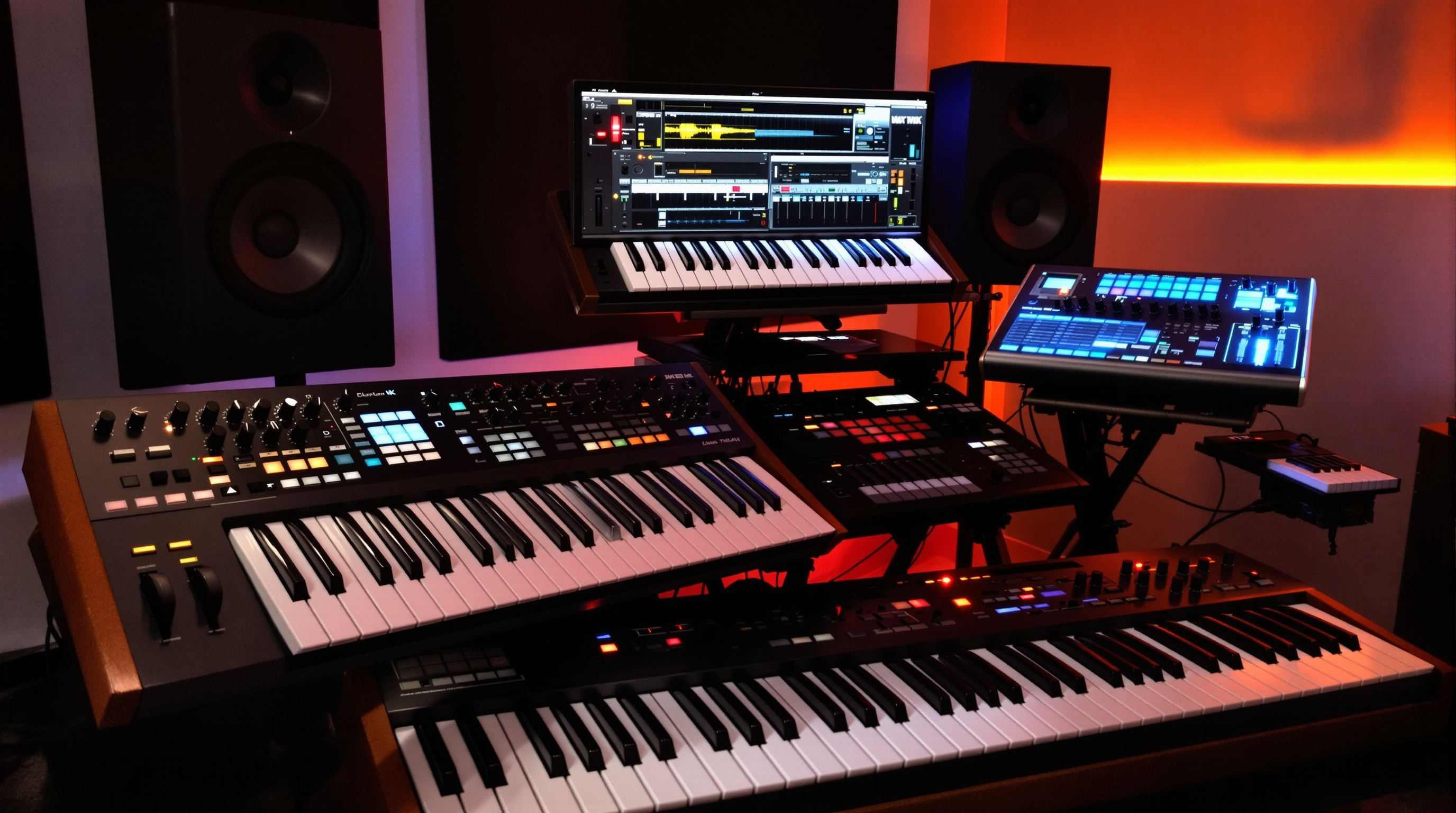
MIDI controllers don't produce sound themselves but trigger software instruments and control DAW parameters. They range from simple key beds to feature-rich controllers with pads, knobs, faders, and displays.
Key considerations include key count (25, 49, 61, or 88 keys), key action (synth action, semi-weighted, or fully weighted), and additional controls. Native Instruments, Novation, and Akai produce popular MIDI controllers.
Choosing Your Keyboard
Consider your primary use case. Pianists learning classical repertoire need weighted 88-key instruments. Gigging musicians might prefer portable stage keyboards. Producers and sound designers may prioritise synthesizers and controllers.
Budget, space, and portability requirements also factor into the decision. Many musicians own multiple keyboards for different applications - a weighted digital piano for practice and a lightweight synth for gigging, for example.
Practice Ergonomics for Keyboard Players
Correct posture and technique at the keyboard help prevent strain injuries common among pianists and keyboardists. Sit with your forearms roughly parallel to the floor, wrists neutral rather than bent, and fingers naturally curved. Adjust your bench height so your elbows are slightly above the keys, and keep your feet flat on the floor or on the sustain pedal.
During long practice sessions, take regular breaks to stretch your wrists, hands, and shoulders. Many professional pianists incorporate hand and forearm exercises into their daily routines to maintain flexibility and strength. If you experience persistent pain or fatigue, consider consulting a physiotherapist who specialises in performing arts medicine.