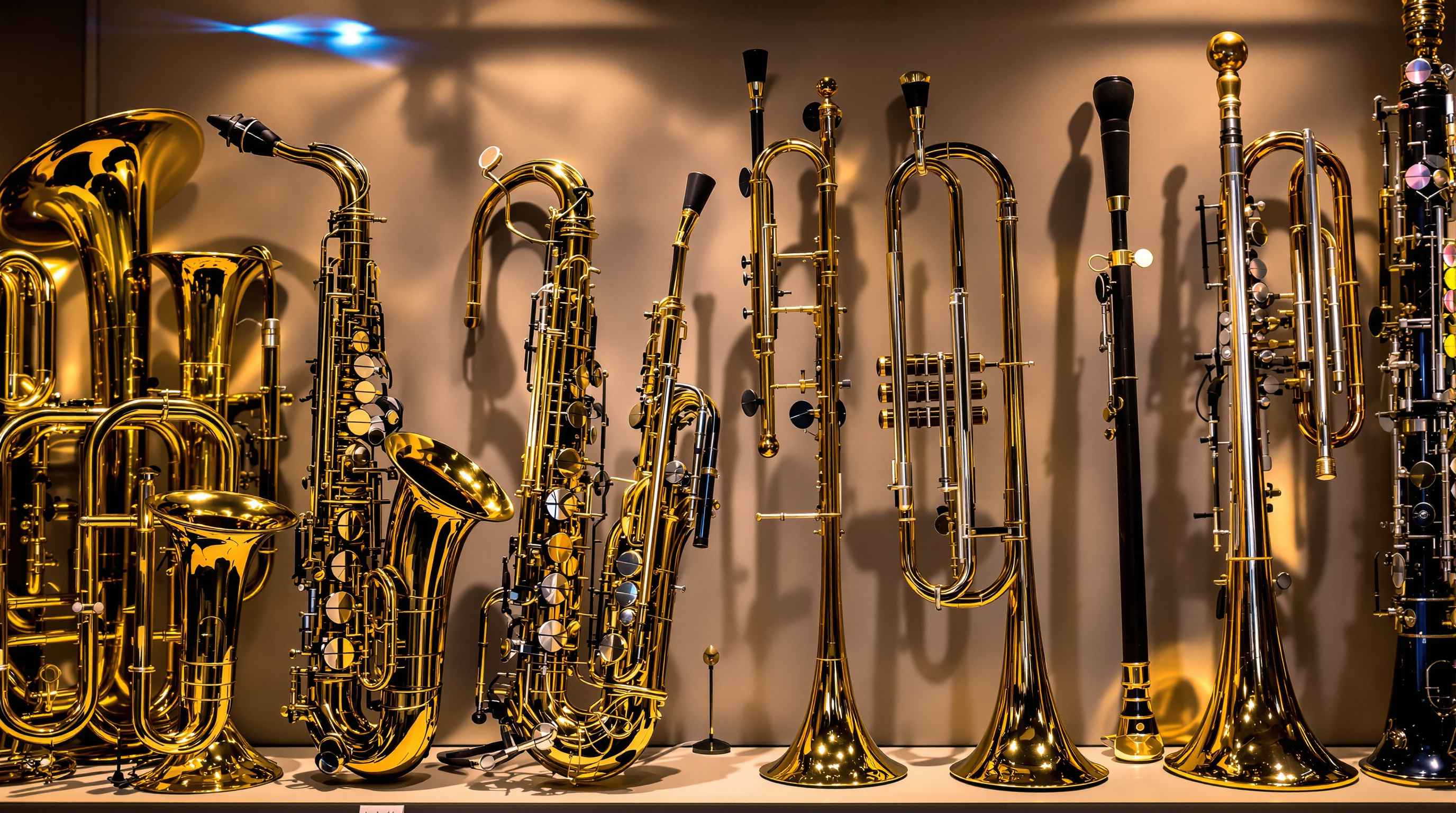
Wind and brass instruments bring distinctive voices to jazz, classical, and contemporary music. From the expressive saxophone to the bright trumpet, these instruments require breath control and embouchure development but reward dedication with unmatched expressiveness.
Saxophones
Saxophones bridge classical, jazz, and popular music with their expressive range and distinctive tone. The alto saxophone is most popular for beginners due to its manageable size and comfortable key spacing. Tenor saxophones offer deeper, richer tones beloved in jazz. Soprano and baritone saxophones complete the family.
Yamaha produces reliable student saxophones, while Selmer Paris remains the choice of many professionals. Consider key action, intonation, and build quality when choosing a saxophone.
Trumpets and Cornets
Trumpets produce bright, piercing tones essential to jazz, orchestral, and brass band music. The standard Bb trumpet suits most players, while C trumpets are common in orchestral settings. Pocket trumpets offer portability for traveling musicians.
Cornets, with their more conical bore, produce a mellower, more blending tone favoured in brass bands and certain orchestral works. Flugelhorns offer even warmer, darker tones for ballads and mellow jazz.
Trombones
Trombones offer smooth slide-based pitch control unique among brass instruments. Tenor trombones are most common, while bass trombones extend the low range. Valve trombones substitute valves for the slide in some applications.
The slide mechanism enables smooth glissandos and precise pitch adjustment impossible on valved instruments. Quality slide action is crucial - look for well-fitted, responsive slides that move freely.
Clarinets
Clarinets represent the woodwind family with their distinctive warm, woody tone. The Bb clarinet is most common, while the bass clarinet extends into lower registers. Clarinets require reed selection and maintenance, with players often trying many reeds to find favourites.
Student clarinets in plastic or resonite bodies offer durability and affordable entry, while professional instruments in grenadilla or other woods provide richer tone and response.
Flutes
Flutes produce silvery, agile tones through edge-blown airflow. Student flutes often feature offset G keys and closed holes for easier technique development. Open-hole flutes, standard for advancing players, allow advanced techniques and superior tone control.
Material affects tone - nickel silver provides durability and affordability, while silver and gold offer progressively richer, more complex tones. Headjoint cut significantly affects response and tone color.
Choosing Your Instrument
Student instruments from reputable manufacturers suit beginners with easier playability and durable construction. As skills develop, intermediate and professional instruments offer superior materials, craftsmanship, and tonal possibilities.
Consider renting before buying, especially for children whose interest may change or who may switch instruments. Quality student instruments from Yamaha, Jupiter, and other established manufacturers provide reliable performance and hold value for resale.