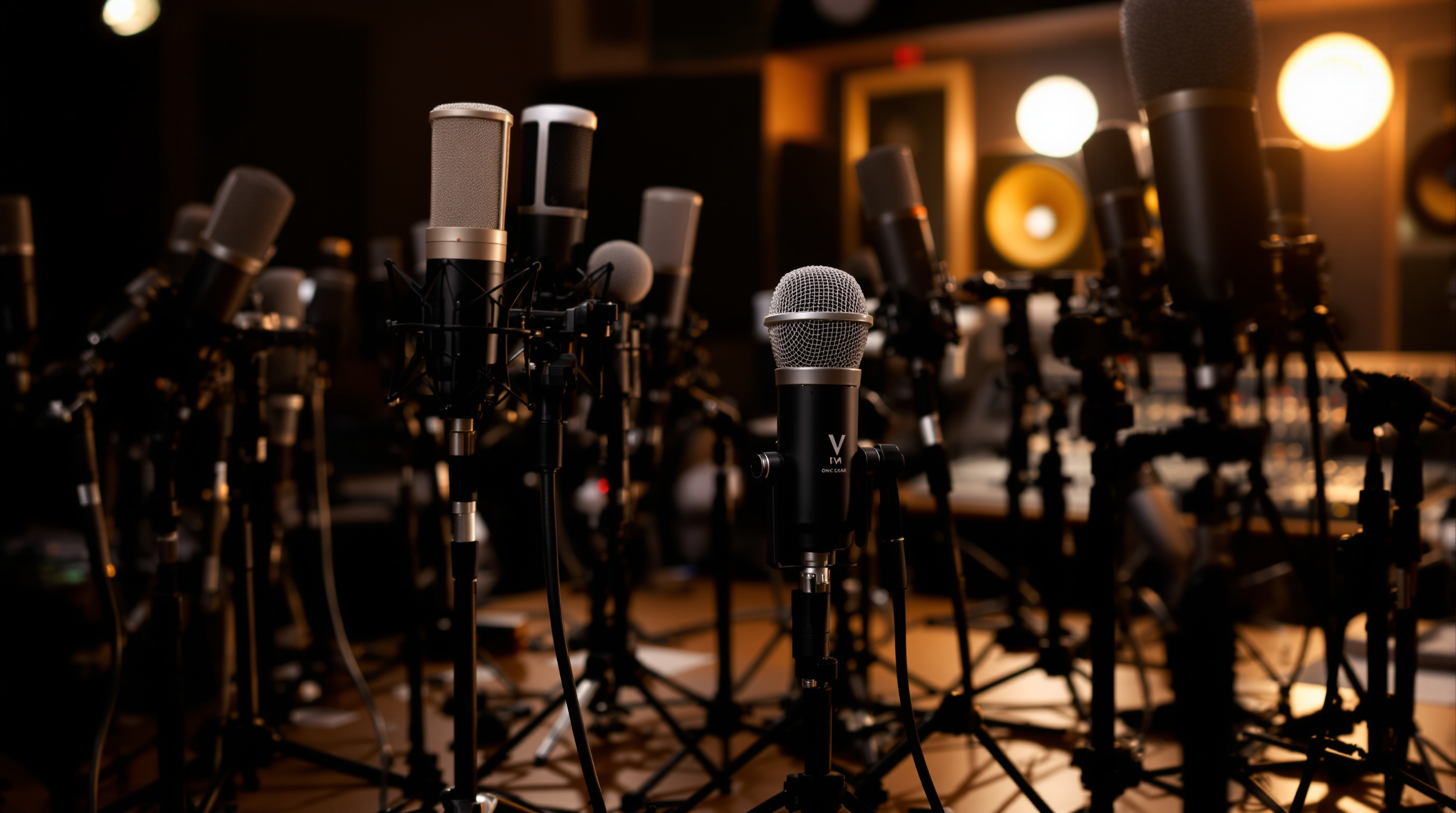
Microphones are essential tools for recording and live sound, with different types suited to various applications. Understanding the differences between microphone types, polar patterns, and applications helps you choose the right mic for your needs.
Dynamic Microphones
Dynamic microphones are rugged, versatile workhorses that handle high sound pressure levels without distortion. They don't require phantom power and are relatively immune to humidity and temperature changes, making them ideal for live performance.
The Shure SM58 is the industry-standard vocal mic, found on stages worldwide. The SM57 is equally ubiquitous for instrument miking, particularly guitar amps and snare drums. Dynamic mics are excellent for loud sources and environments where durability matters.
Condenser Microphones
Condenser microphones offer superior sensitivity and detail, capturing nuances that dynamic mics may miss. They require phantom power (usually 48V, supplied by audio interfaces or mixers) and are more sensitive to handling noise and environmental factors.
Large-diaphragm condensers excel at recording vocals and acoustic instruments, offering warmth and presence. Small-diaphragm condensers provide accurate transient response for acoustic guitars, drum overheads, and orchestral recording. Rode, Audio-Technica, and Neumann are respected condenser manufacturers.
Ribbon Microphones
Ribbon microphones use a thin metal ribbon suspended in a magnetic field to capture sound. They're known for their smooth, warm character with a natural high-frequency roll-off that many find pleasing, especially on brass, strings, and guitar amplifiers.
Traditional ribbon mics are delicate and shouldn't be used with phantom power (which can damage the ribbon). Modern designs from Royer and AEA are more robust while maintaining the classic ribbon sound.
USB Microphones
USB microphones include built-in analog-to-digital converters and connect directly to computers, simplifying home recording and podcasting setups. While they sacrifice some flexibility compared to XLR microphones, they offer convenience for beginners and content creators.
Quality USB microphones from Blue, Rode, and Audio-Technica provide impressive results for voice recording, streaming, and basic music production without requiring additional audio interfaces.
Polar Patterns
Polar patterns describe how microphones pick up sound from different directions. Cardioid mics focus on sound from the front while rejecting sound from behind, ideal for isolating sources. Omnidirectional mics pick up equally from all directions, capturing room ambience. Figure-8 patterns pick up from front and back while rejecting sides.
Some microphones offer switchable polar patterns, providing versatility for different recording situations. Understanding polar patterns helps with microphone placement and achieving desired isolation or ambience.
Choosing Your Microphone
Consider your primary use case when choosing microphones. For vocals, a large-diaphragm condenser offers studio quality, while an SM58 serves live performance reliably. For guitar amps, the SM57 is a proven choice. Drum recording often requires multiple microphones of different types.
Start with one or two versatile microphones and expand your collection as you identify specific needs. A quality large-diaphragm condenser and an SM57 or SM58 cover many recording situations effectively.